Daniel K. Ludwig Professor for Cancer Research · MIT · Whitehead InstituteWeinberg LineageWeinberg LabGoogle ScholarPubMed
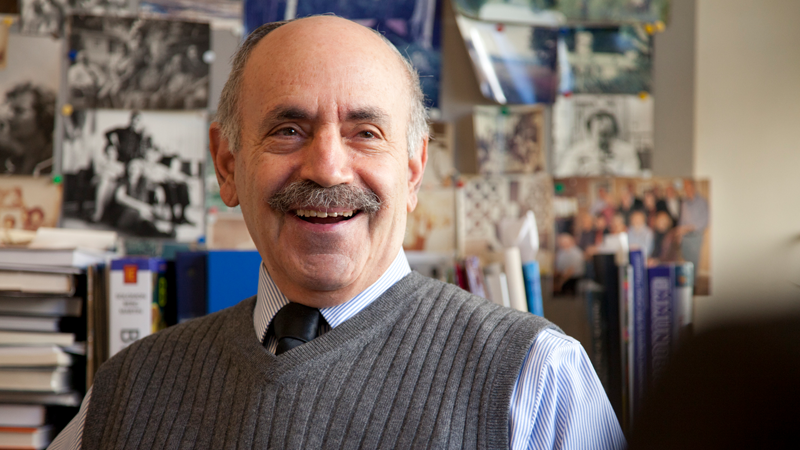
Portrait of Robert A. Weinberg
Cancer biologist · Author · Mentor

Dr. Robert A. Weinberg

Daniel K. Ludwig Professor for Cancer Research and Professor of Biology, Massachusetts Institute of Technology · Founding Member, Whitehead Institute for Biomedical Research · Director, Ludwig Center for Molecular Oncology at MIT · American Cancer Society Research Professor

OncogenesTumor SuppressorsHallmarks of CancerEMT & MetastasisNational Medal of ScienceJapan Prize
222
h-index on Google Scholar
450+
Research publications since 1963
1982
One of the five original Members of the Whitehead Institute
5+
Books for scientists, students and the public
Lifelong MIT

An entire scientific career built at MIT — from undergraduate to founding member of the Whitehead Institute.

Dr. Weinberg received his BS (1964) and PhD (1969) in biology from MIT. After postdoctoral research at the Weizmann Institute of Science and the Salk Institute, he returned to MIT in 1972 to join the newly formed Center for Cancer Research.

In 1982 he was appointed Professor of Biology and became one of the five original Members of the Whitehead Institute. His laboratory identified the first human oncogene and contributed to isolating the first tumor suppressor gene, and his writing — from The Biology of Cancer to "The Hallmarks of Cancer" — has shaped how generations of scientists learn the field.

Biography

About Dr. Weinberg

Robert A. Weinberg, PhD, is a cancer biologist whose discoveries established the genetic basis of human cancer.

  1. Massachusetts Institute of Technology

    BS in biology (1964) and PhD in biology (1969).

  2. Stillman College, 1965–1966

    Instructor in biology, Tuscaloosa, Alabama.

  3. Weizmann Institute of Science, 1969–1970

    Postdoctoral research in the laboratory of Ernest Winocour.

  4. Salk Institute, 1970–1972

    Postdoctoral research with Renato Dulbecco.

  5. MIT Center for Cancer Research, 1972

    Returns to MIT to join the recently formed center.

  6. Whitehead Institute, 1982

    Appointed Professor of Biology at MIT; becomes one of the five original Members of the Whitehead Institute.

  7. 1985 – present

    American Cancer Society Research Professor. Named Director of the Ludwig Center for Molecular Oncology at MIT in 2006.

Professional focus

Dr. Weinberg's research addresses the molecular and cellular mechanisms of cancer pathogenesis — from the genes that initiate tumors to the programs that allow carcinoma cells to invade, metastasize and resist therapy.

Appointments

  • MIT — Daniel K. Ludwig Professor for Cancer Research; Professor of Biology
  • Whitehead Institute — Founding Member
  • Ludwig Center for Molecular Oncology at MIT — Director
  • American Cancer Society — Research Professor
  • Broad Institute — Associate Member

Teaching and service

He has taught MIT's introductory biology course (7.012) with Eric Lander, and has served on scientific advisory boards including the Institute of Molecular Pathology in Vienna, the Weizmann Institute and Massachusetts General Hospital.

Translation

With Eric Lander, he co-founded Verastem, a biopharmaceutical company focused on developing therapies that target cancer stem cells.

Profiles

Discoveries

Finding the genes of cancer

Before the late 1970s, the cause of human cancer at the level of genes was unknown. Work from the Weinberg laboratory helped provide the answer.

Oncogenes: the accelerator stuck on

In 1979, Dr. Weinberg and colleagues provided the first demonstration that the genomes of chemically transformed cells carry a mutant oncogene. Using DNA transfection, the laboratory went on to isolate a transforming gene from a human bladder carcinoma cell line (1982) — the first human cancer-causing gene, later identified as a mutant RAS gene. Follow-up work the same year revealed how a single point mutation activates it.

Tumor suppressors: the brakes removed

In 1986, the laboratory participated in isolating the retinoblastoma gene, RB — the first known tumor suppressor gene. Together, oncogenes and tumor suppressors became the two pillars of cancer genetics.

Making human tumor cells from defined parts

In 1999, his group reported the first experimental transformation of normal human cells into cancer cells using a defined set of genetic elements, showing how few changes are needed to create a malignant cell.

Metastasis, EMT and cancer stem cells

Over the past two decades the laboratory has shown that the epithelial–mesenchymal transition (EMT) is essential for metastasis (2004), that EMT generates cells with stem-cell properties (2008, with Sendurai Mani as first author), that latent EMT programs let both normal and neoplastic cells enter stem-like states (2015), and that intermediate cell states across the epithelial–mesenchymal spectrum differ in metastatic capability (2022).

Timeline

1979
Mutant oncogene in transformed cells
1982
First human oncogene (RAS)
1986
First tumor suppressor (RB)
1999
Human tumor cells from defined elements
2000
"The Hallmarks of Cancer"
2004
Twist and EMT in metastasis
2008
EMT generates stem-like cells
2011
"Hallmarks: The Next Generation"
2022
Intermediate E/M states

Selected publications

  • 1982
    Isolation of a transforming sequence from a human bladder carcinoma cell line
    Shih C, Weinberg RA. Cell 29(1):161–169 · DOI
  • 1982
    Mechanism of activation of a human oncogene
    Tabin CJ, Bradley SM, Bargmann CI, Weinberg RA, et al. Nature 300:143–149 · DOI
  • 1999
    Creation of human tumour cells with defined genetic elements
    Hahn WC, Counter CM, Lundberg AS, Beijersbergen RL, Brooks MW, Weinberg RA. Nature 400:464–468 · DOI
  • 2000
    The Hallmarks of Cancer
    Hanahan D, Weinberg RA. Cell 100(1):57–70 · DOI
  • 2008
    The epithelial–mesenchymal transition generates cells with properties of stem cells
    Mani SA, Guo W, Liao MJ, … Weinberg RA. Cell 133(4):704–715 · PubMed Central
  • 2011
    Hallmarks of Cancer: The Next Generation
    Hanahan D, Weinberg RA. Cell 144(5):646–674 · DOI
  • 2011
    A perspective on cancer cell metastasis
    Chaffer CL, Weinberg RA. Science 331:1559–1564 · DOI
Impact · 1979 — present

The science that turned cancer into a genetic disease

Before Robert Weinberg's work, cancer was understood by what it looked like under a microscope. His laboratory showed what it is: the consequence of specific, identifiable changes in a cell's own genes. That shift, from description to mechanism, is the foundation on which modern cancer biology and targeted therapy were built.

Four discoveries that changed the field

Each opened a line of research that is still active today.

Weinberg's laboratory did not make one breakthrough. It made several, a decade apart, each time redefining what the field was asking.

1979 – 1982

The first human oncogene

Weinberg and his colleagues showed that DNA taken from chemically transformed cells could carry the cancerous state into normal cells. They then isolated the responsible gene from a human bladder carcinoma and identified it as RAS, and, with collaborators, traced its activation to a single base change.

It was the first demonstration that a human cancer could be caused by a defined mutation in a cellular gene. The idea that cancer is driven by mutated proto-oncogenes, now a textbook premise, began here.

Shih & Weinberg, Cell 1982 · Tabin et al., Nature 1982
1983 – 1986

Cooperating oncogenes and the first tumor suppressor

Land, Parada and Weinberg showed that a single oncogene is not enough: transforming a normal cell requires at least two acting together. This gave molecular form to the long-suspected multistep nature of cancer.

Three years later, in collaboration with Thaddeus Dryja, the laboratory cloned RB, the retinoblastoma gene, the first gene shown to cause cancer by its loss rather than its activation. Tumor suppressors became the second half of the cancer-gene story.

Land et al., Nature 1983 · Friend et al., Nature 1986
1999 – 2011

A defined cancer cell, and the Hallmarks of Cancer

In 1999 the laboratory built a human tumor cell from scratch, converting normal cells with a small, defined set of genetic elements. It was proof that the multistep model was sufficient as well as necessary.

With Douglas Hanahan, Weinberg then distilled a sprawling literature into a shared framework: the Hallmarks of Cancer. The 2000 and 2011 papers became among the most cited in the biomedical literature and gave researchers, clinicians and students a common language for the disease.

Hahn et al., Nature 1999 · Hanahan & Weinberg, Cell 2000 and 2011
2004 – present

EMT, cancer stem cells and metastasis

Most cancer deaths come from metastasis, not primary tumors. Weinberg's laboratory showed that carcinoma cells hijack an embryonic program, the epithelial–mesenchymal transition, to invade and disseminate, and that the same program endows them with stem-cell-like traits.

Linking EMT to cancer stem cells reframed therapy resistance, dormancy and relapse as problems of cell plasticity rather than fixed mutation, and launched a field now pursued by hundreds of laboratories worldwide.

Yang et al., Cell 2004 · Mani et al., Cell 2008

From the bench to the clinic

Basic discoveries become medicines slowly. Several of Weinberg's have.

The genes his laboratory identified in the 1980s are now the targets of approved drugs taken by patients every day.

  1. 1982

    Mutant RAS isolated from a human tumor

    The first human oncogene, and the first disease-causing point mutation in cancer.

    2021

    Direct KRAS inhibitors reach patients

    After decades in which RAS was considered undruggable, the first KRAS G12C inhibitors were approved for lung cancer. RAS mutations are now routinely tested in clinical practice and guide treatment choices in lung, colorectal and pancreatic cancers.

  2. 1986

    RB cloned

    The first tumor suppressor gene, revealing the cell-cycle brake that cancers must release.

    2015

    CDK4/6 inhibitors become standard of care

    Drugs that restore RB's braking function by blocking the kinases that inactivate it are now first-line therapy for the most common form of advanced breast cancer, and RB status itself helps predict who will respond.

  3. 1983 – 1999

    Cancer requires cooperating lesions

    Multiple genetic changes, acting together, are necessary and sufficient to make a human cell malignant.

    Today

    Combination targeted therapy and tumor genotyping

    The logic of hitting several pathways at once, and of sequencing a patient's tumor to find which ones, follows directly from the multistep model. The 2021 Japan Prize recognized this model's influence on diagnosis and treatment.

  4. 2004 – 2008

    EMT drives metastasis and generates cancer stem cells

    Carcinoma cells change state to spread, and in doing so acquire resistance to conventional therapy.

    Ongoing

    Targeting plasticity and residual disease

    Strategies that aim at the mesenchymal or stem-like state, including compounds first identified in the Weinberg laboratory and developed through Verastem, the company he co-founded with Eric Lander, are in preclinical and clinical testing. The goal is to prevent relapse rather than only shrink tumors.

Drug approvals cited above are the work of many laboratories, companies and clinical teams. What Weinberg's research supplied was the target and the rationale.

How a generation learned cancer biology

Author or editor of six books and more than 390 articles.

Weinberg's textbook The Biology of Cancer is the standard text in graduate and medical programs around the world. Many of the researchers and oncologists now practising learned the field from its pages, organized around the same mechanistic logic that his laboratory helped establish.

For general readers, One Renegade Cell and Racing to the Beginning of the Road told the story of how cancer's genetic basis was uncovered, including the race to the first oncogene. Natalie Angier's Natural Obsessions, written after a year inside the Weinberg laboratory, remains one of the most-read accounts of how competitive science actually works.

The Biology of Cancer

The field's defining textbook, now in its second edition.

2007 · 2nd ed. 2013

One Renegade Cell

How cancer begins, for general readers.

1998

Racing to the Beginning of the Road

The search for the origin of cancer.

1996

Genes and the Biology of Cancer

With Harold E. Varmus.

1993

A laboratory that trained the field's leaders

Selected alumni of the Weinberg laboratory.

Perhaps the most durable form of impact is the people. Scientists trained in the Weinberg laboratory went on to found cancer centers, direct institutes, run major laboratories and make landmark discoveries of their own, in oncology, neuroscience and developmental biology alike.

  • Tyler JacksFounding director, Koch Institute at MIT
  • Cornelia BargmannRockefeller University; Breakthrough Prize laureate
  • Clifford TabinChair of Genetics, Harvard Medical School
  • Hartmut LandUniversity of Rochester; oncogene cooperation
  • Luis ParadaDirector, Brain Tumor Center, Memorial Sloan Kettering
  • René BernardsNetherlands Cancer Institute
  • William HahnDana-Farber Cancer Institute
  • Jing YangUC San Diego; Twist and EMT in metastasis
  • Sendurai A. ManiBrown University; EMT and cancer stem cells
  • Piyush GuptaWhitehead Institute; cancer stem cells

Cancer is, at its root, a disease of genes. That sentence can be written with confidence today in large part because of work done in one laboratory in Cambridge, Massachusetts, over more than four decades.

Recognition

Selected honors. See the full list.

Member of the U.S. National Academy of Sciences, the National Academy of Medicine, the American Academy of Arts and Sciences and the American Philosophical Society.

  • Japan Prize, with Bert Vogelstein2021
  • Salk Medal for Research Excellence2016
  • Inaugural Breakthrough Prize in Life Sciences2013
  • Landon–AACR Prize for Basic Cancer Research2006
  • Wolf Prize in Medicine2004
  • National Medal of Science1997
  • Albert Lasker Award for Basic Medical Research1997
  • Keio Medical Science Prize1997
  • Canada Gairdner International Award1992
  • Robert Koch Prize1983
Laboratory

The Weinberg Lab at the Whitehead Institute

The laboratory studies how carcinoma cells — mostly breast cancers — generate aggressive tumors and metastatic outgrowths.

Invasion & metastasis

How cells within a primary tumor acquire the ability to invade and metastasize.

EMT and stemness

How the epithelial–mesenchymal transition and the stem-cell state are interrelated.

Tumor microenvironment

How paracrine and systemic signals push epithelial cells into a mesenchymal, stem-like state.

Therapy resistance

Why quasi-mesenchymal cancer cells resist chemotherapy and checkpoint immunotherapy, and how to overcome it.

Research approach

The group studies the transitions between the organized, sedentary epithelial state and the invasive, motile mesenchymal state, and from there into a stem-cell state in which cells can become cancer stem cells and drive disease progression. Experimentally activating a latent EMT program in otherwise non-metastatic tumor cells allows them to disseminate and form numerous lung micrometastases.

Recent directions

Recent work has examined how inflammation can awaken dormant cancer cells by shifting their epithelial–mesenchymal state, how EMT–ciliary signaling drives therapy resistance in triple-negative breast cancer, regulators of distinct EMT trajectories identified through genome-wide CRISPR screens, and how quasi-mesenchymal cells shield tumors from immune attack.

Institution
Whitehead Institute for Biomedical Research, Cambridge, MA
Department
MIT Department of Biology
Framework

The Hallmarks of Cancer

In January 2000, Douglas Hanahan and Robert Weinberg proposed that the bewildering diversity of cancers could be reduced to a small set of acquired capabilities — a framework that became the most widely used map of cancer biology.

Capability (2000)In simple terms
Self-sufficiency in growth signalsThe accelerator pedal stuck on
Insensitivity to anti-growth signalsThe brakes don't work
Evading apoptosisRefusing to die when damaged
Limitless replicative potentialEndless generations of descendants
Sustained angiogenesisRecruiting a blood supply
Tissue invasion and metastasisSpreading to other organs

The next generation

In 2011 the authors published "Hallmarks of Cancer: The Next Generation," adding emerging hallmarks and enabling characteristics such as reprogrammed energy metabolism, evasion of immune destruction, genome instability and tumor-promoting inflammation. Later updates by Hanahan have continued to expand the framework, including unlocking phenotypic plasticity.

The Hallmarks seminar series

In 2026, Dr. Weinberg delivered the inaugural lecture of The Hallmarks of Cancer virtual seminar series, organized from Brown University by his former postdoctoral fellow Sendurai A. Mani, to more than 500 registrants worldwide.

Books

Writing about cancer

Dr. Weinberg has written or edited several books, from a standard textbook used by students worldwide to accounts written for general readers.

The Biology of Cancer

A widely used textbook for advanced undergraduates and graduate students, published by Garland Science.

Textbook · multiple editions

One Renegade Cell

How Cancer Begins — a concise account for general readers in the Science Masters series.

Science Masters series

Racing to the Beginning of the Road

The Search for the Origin of Cancer — the story of the hunt for cancer genes, told from inside the lab.

1996

Genes and the Biology of Cancer

Co-written with Harold E. Varmus, former Director of the National Institutes of Health.

Scientific American Library

Written about

Natalie Angier's Natural Obsessions chronicles a year she spent inside the Weinberg laboratory, and Siddhartha Mukherjee's The Emperor of All Maladies describes the laboratory's discovery of RAS and RB.

Mentorship

A school of cancer biology

Alongside his discoveries, Dr. Weinberg is known for training scientists who went on to lead their own fields.

Cornelia Bargmann

Doctoral student; neurobiologist known for work on the genetics of behavior and on the neu/HER2 oncogene.

Clifford Tabin

Doctoral student; developmental geneticist at Harvard Medical School.

Tyler Jacks

Former trainee; founding director of the Koch Institute for Integrative Cancer Research at MIT.

William C. Hahn

Former trainee; cancer geneticist at Dana-Farber Cancer Institute.

Sendurai A. Mani

Former postdoctoral fellow; Dean's Chair of Translational Oncology at Brown University.

These are a few of the many students and fellows who have trained in the laboratory over five decades. Optionally add more alumni and their current positions.

Honors

Honors and memberships

  • Japan Prize2021
  • Breakthrough Prize in Life Sciences2013
  • Salk Institute Medal for Research Excellence2016
  • Hope Funds Award in Basic Research2009
  • Honorary doctorate, Uppsala University2007, Linnaeus commemoration
  • Wolf Prize in Medicine2004, shared with Roger Y. Tsien
  • Albert Einstein World Award of Science1999
  • U.S. National Medal of Science1997
  • Keio Medical Science Prize1997
  • Max Delbrück Medal1996
  • Sloan Prize, GM Cancer Research Foundation1987
  • Golden Plate Award, American Academy of Achievement1985
  • NAS Award in Molecular Biology1984
  • Robert Koch Prize1983
  • Discover Magazine Scientist of the Year1982
  • Member, U.S. National Academy of SciencesAlso National Academy of Medicine
  • Fellow, American Academy of Arts and Sciences
  • Member, American Philosophical SocietyElected 2000
  • Member, Royal Swedish Academy of SciencesSince 1992
Contact

Contact

For research inquiries, trainee positions and speaking invitations, please reach the laboratory through the Whitehead Institute.

Institution
Whitehead Institute for Biomedical Research, Cambridge, MA

Media inquiries

Press requests are best directed to the Whitehead Institute communications office via wi.mit.edu.

Page not found

Return to the home page.